Introduction
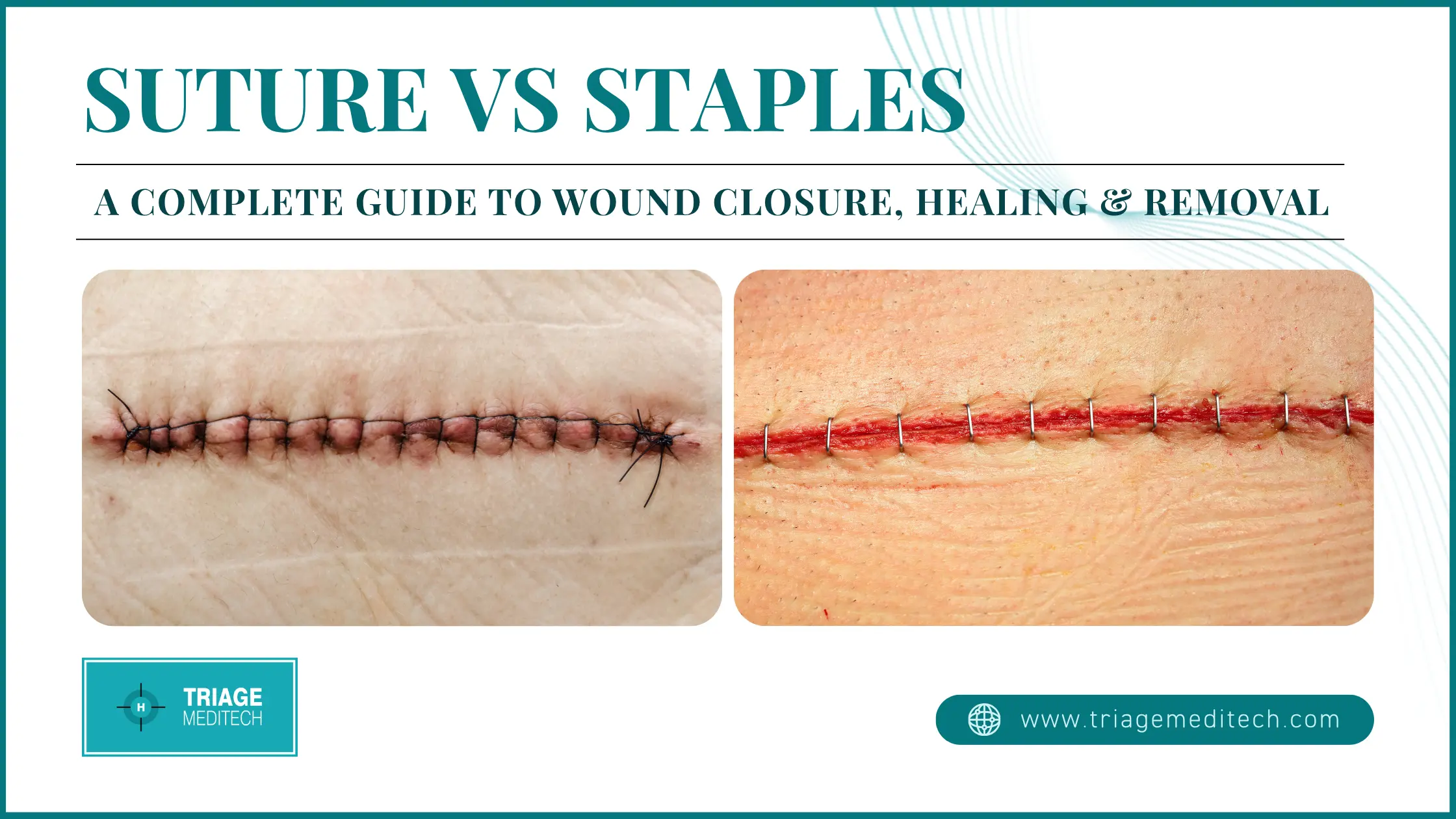
The closure of wounds is one of the most fundamental interventions in modern medicine. Whether following surgery, trauma, or injury, choosing and applying the correct closure technique directly determines healing speed, infection risk, cosmetic outcome, and patient comfort. Sutures and staples (sutures vs staples) are the two most widely used wound closure methods, but they differ substantially in their materials, applications, and removal processes.
This guide provides a comprehensive, clinically accurate overview of both techniques: when to use each, their respective advantages and limitations, the healing process they support, and how removal is correctly performed.
What Are Sutures?
Sutures (commonly referred to as stitches) are medical-grade threads used to approximate (bring together) tissue layers following an injury or surgical incision. They may be manufactured from a wide range of natural and synthetic materials, and are classified into two fundamental categories:
| TYPE | CHARACTERISTICS | COMMON CLINICAL USES |
|---|---|---|
| Absorbable Sutures | Dissolve naturally in the body over days to weeks via enzymatic or hydrolytic degradation. No removal required. | Deep tissue layers, fascial closure, internal organs, subcutaneous fat and mucosal surfaces. |
| Non-Absorbable Sutures | Retain strength indefinitely; must be manually removed once the wound’s tensile strength is sufficient. | External skin closure, tendons, cardiovascular structures and permanent implant fixation. |
What Are Staples?
Skin staples or surgical staples are sterile, stainless steel or titanium clips applied with a disposable skin stapler device. They are designed for the rapid, high-strength closure of long, straight incisions in areas where speed of application or tension strength takes priority over fine cosmetic detail.
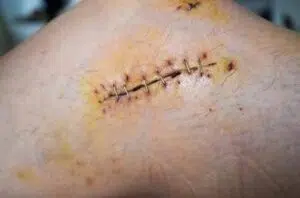
Unlike sutures, all skin staples are non-absorbable and require removal using a dedicated staple remover instrument. The procedure of removing staples is commonly termed staple suture removal or staple removal.
Sutures vs Staples: When is each used?
| SUTURES ARE PREFERRED WHEN… | STAPLES ARE PREFERRED WHEN… |
|---|---|
| Cosmetic result is critical (face, lips, hands, genitals) | Speed is essential – stapling is 3–4 × faster than suturing |
| Wound edges are irregular or curved | Long, straight surgical incisions (abdomen, thorax, back) |
| Multiple tissue layers require separate closure | High-tension wound closure requiring maximum strength |
| Fine precision is required (ophthalmic, plastic surgery) | Emergency settings where time is critical |
| Paediatric patients where anaesthesia duration matters less | Scalp lacerations where cosmetics are less critical |
Advantages and Disadvantages
Sutures: Benefits and Drawbacks | |
|---|---|
Advantages | Disadvantages |
| Superior cosmetic outcomes in delicate areas | More time-consuming to apply, especially for long wounds |
| Absorbable types eliminate the need for a removal visit | Risk of suture track marks if left in too long |
| Flexible for irregular or curved wound edges | Requires skill and experience to achieve even tension |
| Multiple materials available to match clinical needs | Thread can act as a foreign body if a reaction occurs |
Staples: Benefits and Drawbacks | |
|---|---|
Advantages | Disadvantages |
| Significantly faster application – ideal in emergencies | Require a specialist staple remover for removal |
| Consistent, strong closure with minimal tissue trauma | May leave visible track marks, especially on the face |
| Lower risk of infection in certain wound types | Not suitable for irregular wound edges or curved incisions |
| Useful in laparoscopic and minimally invasive surgery | Less comfortable for the patient during and after application |
The Healing Process – Sutures vs Staples
Whether sutures or staples are used, their primary function in wound healing is identical: to physically approximate wound edges, reduce tension on healing tissue, minimise dead space (which can harbour infection), and support the body’s natural repair cascade.
| WOUND LOCATION | TYPICAL REMOVAL TIMING | NOTES |
|---|---|---|
| Face (lips, eyelids, nose) | 3–5 days | Rapid epidermal healing; early removal minimises scarring |
| Scalp (sutures or staples) | 7–10 days | Well-vascularised; heals quickly, but sutures can embed |
| Neck/trunk | 7–10 days | Good blood supply; moderate tension |
| Abdomen/chest/back | 10–14 days | High tension; allow adequate strength before removal |
| Upper limb (arms, hands) | 7–10 days | Hands: consider 10–12 days due to movement |
| Lower limb/knees/ankles | 10–14 days | High movement; increased risk of dehiscence if removed early |
Suture And Staple Removal – Step by Step
IMPORTANT SAFETY NOTICE: Suture and staple removal must only be performed by trained healthcare professionals. Attempting removal at home risks wound dehiscence (reopening), introducing infection, and incomplete removal of closure material.
Suture Removal Procedure
- Gather a sterile suture removal kit: forceps, suture scissors or stitch cutter, sterile gauze and antiseptic.
- Clean the wound site gently with an appropriate antiseptic solution.
- Using forceps, grasp the suture knot and gently lift it away from the skin surface.
- Cut one limb of the suture as close to the skin as possible-this ensures that no external (potentially contaminated) thread is pulled through the tissue.
- Withdraw the suture smoothly with a single steady pull. The patient may feel a mild tugging sensation.
- Inspect the wound for dehiscence, residual suture material, or signs of infection.
- Apply a sterile NPWT dressing or wound closure strip if additional support is needed.
Staples Removal Procedure
- Obtain a calibrated staple removal device – never use improvised tools.
- Clean the wound and surrounding skin with an antiseptic.
- Position the lower jaw of the staple remover under the bridge of the staple.
- Squeeze the handles together: the device bends the staple’s legs outward and upward, releasing both prongs from the skin simultaneously.
- Lift the staple clear of the wound. The patient may feel a brief pinching sensation.
- Place removed staples directly into a sharp’s container.
- Inspect the wound and apply appropriate post-removal dressing if required.
Complications to Monitor
Although wound closure with sutures and staples (sutures vs staples) is generally safe, the following complications may occur and require prompt clinical review:
| COMPLICATION | SIGNS & SYMPTOMS | ACTION REQUIRED |
|---|---|---|
| Wound infection | Increasing redness, warmth, swelling, pus, fever, or red streaking from the wound | Contact healthcare provider immediately; may require antibiotics or wound opening |
| Wound dehiscence | Partial or complete reopening of the wound edges | Do not attempt to re-close; cover with a clean dressing and seek urgent medical review |
| Scarring | Thick, raised, or discoloured scar (more common with staples or poorly tensioned sutures) | Consult a clinician at follow-up; scar management may be recommended |
| Suture / staple reaction | Redness and swelling confined to the suture/staple lines without infection | Monitor; the clinician may recommend early removal |
| Embedded suture/staple | Suture or staple becomes buried as tissue swells over it | Surgical removal required; do not attempt at home |
Frequently Asked Questions
Q1. Which is better: sutures or staples?
Neither is universally superior. The choice depends on wound location, tension, cosmetic requirement, and urgency. Sutures provide superior cosmetic outcomes in delicate or irregular wounds; staples offer speed and strength for long surgical incisions. Surgeons weigh all these factors before selecting the closure method.
Q2. Is staple removal painful?
Staple removal is typically quick and causes only mild discomfort – most patients describe it as a brief pinching or tugging sensation. A topical anaesthetic cream can be applied beforehand for anxious patients or sensitive areas. The procedure is generally completed in under two minutes.
Q3. Can stitches or staples be removed at home?
No. Removal should only be performed by a qualified healthcare professional using sterile instruments. Attempting removal at home risks wound reopening, incomplete removal of closure material, introduction of infection, and – with staples — injury from improvised tools.
Q4. How long do sutures and staples stay in?
Timing depends primarily on wound location. Facial wounds: 3–5 days. Scalp: 7–10 days. Trunk and upper limbs: 7–10 days. Abdomen, lower limbs, and joints: 10–14 days. Your clinician will advise the appropriate timeframe based on your specific wound and healing progress.
Q5. Do staples leave worse scars than sutures?
Staples can leave small symmetric marks (‘railroad tracks’) if left in too long or placed under tension. On cosmetically sensitive areas such as the face, sutures placed with fine technique generally produce less noticeable scars. However, in areas where cosmesis is not the primary concern, healing outcomes are comparable.
Medical Disclaimer: This article is intended for educational and informational purposes only. It does not constitute individual medical advice and should not replace professional clinical assessment and care. Always consult a qualified healthcare professional regarding wound closure, care, and removal. Triage Meditech Pvt. Ltd. accepts no liability for clinical decisions made based on the content of this article.