Case Study of Diabetic Foot Ulcer
Aim of Therapy:
MANAGEMENT OF DIABETIC FOOT ULCER USING NPWT(VTG 2901)
Patient Information:
| First Dressing Application Date: | 25/05/2022 |
| Dressing Remove Date: | 31/05/2022 |
| Patient Name: | Mr Ghanshyam |
| Patient Age: | 65-Year-Old |
| Wound Type: | Diabetic Foot Ulcer |
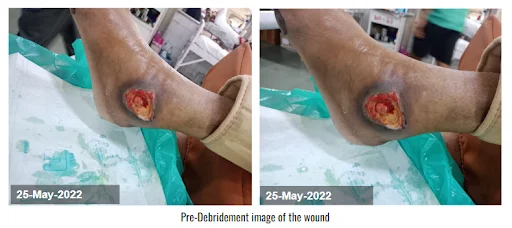
| Exudates Type with Wound Depth: | Purulent (1 Cm Deep Approx ) |
| Hospital Name: | Kem Hospital (Mumbai) |
| Doctor Name: | Dr. Siddharth |
| Doctor Specialty: | General Surgeon |
| Clinical Person Name: | Mr Vikas Prajapati |
| Patient Profile: | Type 2 Diabetic Patient |
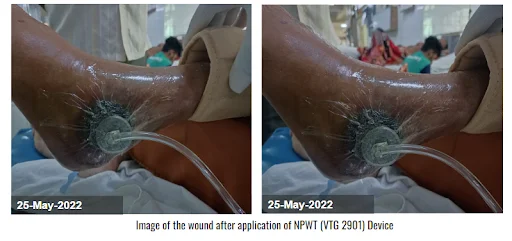
| Dressing Type/Device: | CCNPWT (VTG-2901) |
| Pressure Range: | -125mmHg |
| Any Major Illness During Therapy: | Pain, Swelling |
| Diabetic / Non -Diabetic | Diabetic |
| Supportive Ongoing Treatment | Diabetic medication |
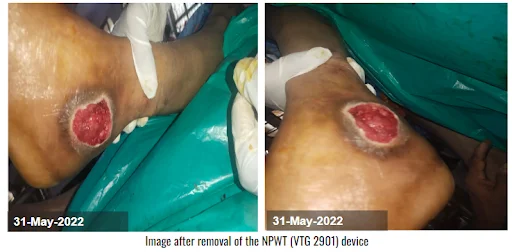
| Total Days of Recovery or Treatment Duration | 5 Days |
| Wound Location | Lower Left limp (Ankle) |
Clinical Scenario:
A 65-year-old male patient presented to the hospital with a 2-month history of an ulcer in his left foot that had begun to spread. He had known uncontrolled type 2 diabetes mellitus. The patient presented with severe swelling in his left ankle and was diagnosed with an abscess that required surgical drainage. Following an examination of the wound, the doctor recommended CCNPWT (VTG 2901) for complete wound healing.
Management:
Debridement was conducted before initiation of therapy, after that CCNPWT (VTG 2901) was applied at -125 mmHg pressure for 5 days. The wound underwent a single session of dressing change. During therapy, the patient was on ongoing supportive treatment to prevent further infection. After the removal of the dressing, the wound bed was occupied with granulation tissue sufficiently and the wound size was also reduced. There was no secondary infection during treatment, and the period of health was also improved. After follow-up, the wound underwent a further process of closure.