

Living with diabetes demands careful attention to many aspects of health, from monitoring blood glucose to making the right lifestyle changes. Yet foot health remains one of the most overlooked areas of diabetes management. What may appear to be a minor blister, cut, or callus can, if left unnoticed or untreated, progress into a diabetic foot ulcer with serious consequences. Understanding why this happens is essential to recognising the risks early and taking the right steps to prevent them. This guide covers everything patients, caregivers, and clinical professionals need to know about diabetic foot ulcers – from the underlying causes to evidence-based treatment and practical daily prevention.
What Is a Diabetic Foot Ulcer?
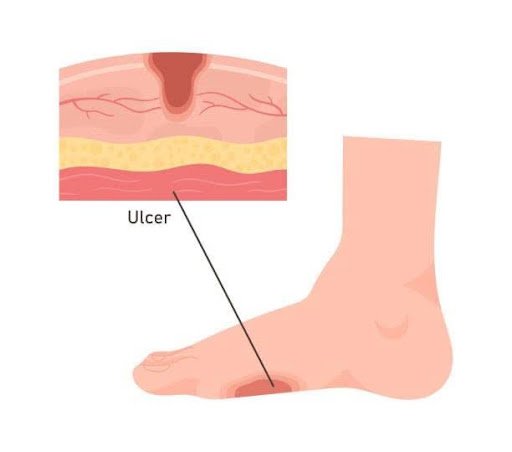
When we think of a foot ulcer, we often imagine a large, obvious wound. In reality, a diabetic foot ulcer may begin as something much smaller—a blister, a crack in dry skin, or a pressure point caused by footwear. The problem is not always the size of the injury; it is the body’s reduced ability to notice and heal it. It is one of the most common and serious complications of diabetes, affecting approximately 15% of people with the condition at some point in their lifetime. Long-term Hyperglycemia damages both nerves and blood vessels, creating a dangerous combination: injuries go unfelt due to neuropathy, and poor circulation prevents the body from healing those injuries efficiently.
WHY IT MATTERS: A small unnoticed blister in a person with diabetes can progress to a deep, infected wound within days. Early detection and structured wound care are the difference between healing and amputation.
Why Do Foot Ulcers Occur? The Three Core Causes
1. Peripheral Neuropathy (Nerve Damage)
Peripheral neuropathy is the leading cause of diabetic foot ulcers. Sustained high blood glucose levels damage the sensory nerves responsible for transmitting pain signals from the feet to the brain. As a result, patients may sustain cuts, blisters, or pressure injuries without ever feeling them – allowing wounds to worsen for days or weeks without treatment.
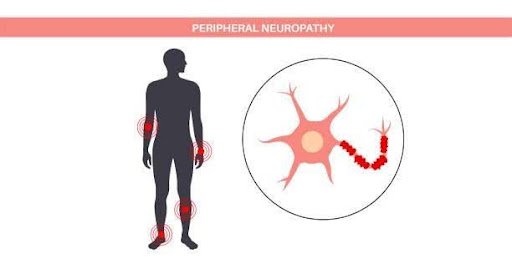
Autonomic neuropathy further compounds the problem by reducing perspiration in the feet, causing chronic dryness, skin cracking, and fissures that act as bacterial entry points.
2. Peripheral Arterial Disease (PAD) – Poor Circulation
Even when an injury is noticed, healing depends on the body’s ability to deliver the resources needed for repair. Oxygen, nutrients, and immune cells are all carried through the bloodstream to the wound, where they support tissue regeneration and help fight infection.
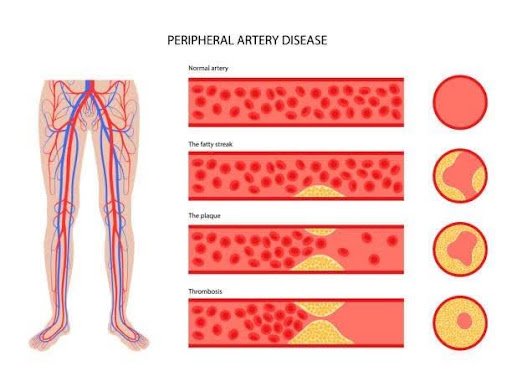
In people with diabetes, this process is often compromised. Over time, blood vessels in the lower limbs can become narrowed and hardened, reducing the flow of blood to the feet. With a limited supply of oxygen and essential nutrients, wounds heal more slowly, the risk of infection increases, and in severe cases, the affected tissue may become oxygen-deprived (ischaemic), requiring specialised vascular intervention to restore circulation.
3. Foot Deformities and Pressure Points
Diabetic changes in muscle and connective tissue can alter foot architecture over time, producing conditions such as Charcot foot, hammertoes, and bunions. These deformities concentrate pressure on specific areas of the foot. Ill-fitting footwear exacerbates this, creating repetitive friction at pressure points until the skin eventually breaks down into a wound.
Signs & Symptoms – What to Watch For
Early detection is the cornerstone of effective diabetic foot management. Patients should inspect their feet daily in good lighting, ideally using a mirror to examine the soles. Key warning signs include:
| WARNING SIGN | WHAT IT MAY INDICATE |
|---|---|
| Wound drainage / Odour | Fluid leaking from the wound, often with an unpleasant smell, indicates possible infection or breakdown of wound tissue. |
| Redness, warmth, or swelling | Signs of local inflammation or early infection. Warmth in one foot compared to the other is a red flag. |
| Dry, peeling, or cracked skin | Autonomic neuropathy reduces natural skin moisture. Cracks in dry skin are entry points for bacteria. |
| Calluses with bleeding beneath | Calluses over pressure points can hide ulcers forming underneath. Bleeding within a callus is an emergency sign. |
| Black tissue (eschar or gangrene) | Dead tissue due to severely impaired blood supply. Requires immediate medical attention; this is a limb-threatening emergency. |
Diabetic Wound Care: How to Treat Foot Ulcers
Diabetic foot ulcers should never be self-treated. Management requires a structured, multi-pronged approach under the supervision of a podiatrist, vascular surgeon, or wound care specialist. The five core pillars of DFU treatment are:
1. Offloading – Removing Pressure from the Wound
Continued weight-bearing on a plantar ulcer pushes infection deeper and prevents healing. Offloading is therefore not optional; It is the foundation upon which all other treatments rest. Options include:
- Total contact casting (TCC) – the gold standard; irremovable cast walkers deliver equivalent outcomes
- Specialised therapeutic footwear and diabetic shoes
- Removable cast walkers (less effective due to patient compliance)
- Non-weight-bearing aids: crutches or wheelchair for severe cases
2. Debridement – Clearing the Wound Bed
Removal of necrotic (dead) tissue, slough, and biofilm is essential to convert a stalled chronic wound into an actively healing acute wound. Sharp surgical debridement is the most evidence-supported method, but enzymatic and autolytic options exist for cases where surgery is contraindicated.
3. Infection Control
Foot ulcers are highly prone to infection. Management includes appropriate antibiotic therapy (guided by deep tissue culture, not superficial swab), local wound antiseptics, and prompt escalation if signs of systemic infection – fever, elevated white cell count, or rising inflammatory markers -develop.
4. Blood Glucose Optimisation
No topical treatment can compensate for uncontrolled Hyperglycaemia. Elevated blood glucose impairs neutrophil function, delays collagen synthesis, and sustains the inflammatory phase. Target HbA1c below 7–7.5% throughout the active healing period, in close coordination with the patient’s diabetologist.
5. Advanced Therapies for Non-Healing Ulcers
When standard care fails to achieve 50% wound area reduction within four weeks, escalation to advanced therapies should be considered:
- Negative Pressure Wound Therapy (NPWT): Applies controlled sub-atmospheric pressure to accelerate granulation tissue formation and reduce bacterial load. Available via Triage Meditech CCNPWT systems.
- Hyperbaric Oxygen Therapy (HBOT): Delivers pure oxygen under pressure to ischaemic wound beds with documented evidence for diabetic ulcers.
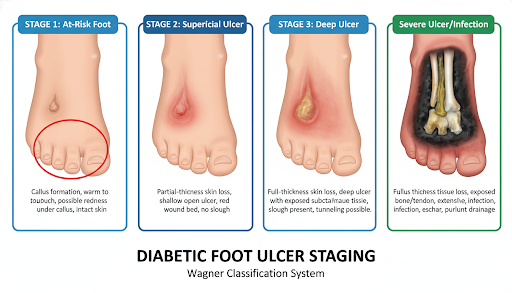
- Bioengineered skin substitutes: Indicated for clean Wagner Grade 1–2 wounds failing standard care.
- Skin grafts: Laboratory-grown skin applied to accelerate coverage of chronic open wounds
Preventing a diabetic foot ulcer is exponentially easier than treating one. The following daily practices significantly reduce the risk of ulcer development:
| PRACTICE | HOW TO DO IT CORRECTLY |
|---|---|
| Daily foot inspection | Use a mirror to check soles. Look for cuts, blisters, redness, calluses, or unusual skin changes. Report anything new to your doctor within 24 hours. |
| Gentle daily washing | Wash feet in warm (not hot) water. Dry thoroughly – especially between the toes – to prevent fungal growth. |
| Moisturise carefully | Apply cream to the tops and soles; avoid between the toes. Prevents cracking from dryness. |
| Never walk barefoot | Not even indoors. Always wear comfortable, protective footwear. Even a small pebble can cause an ulcer. |
| Choose correct footwear | Shoes with a wide toe box, cushioned soles, and no tight seams. Have feet measured professionally; break in new shoes gradually. |
| Nail care | Trim nails straight across and file edges smooth. If vision is impaired or nails are thick, see a podiatrist. |
| Control blood glucose | Maintain HbA1c at target levels as directed by your diabetes care team. Good glycaemic control directly protects nerves and vessels. |
When to Seek Immediate Medical Attention
Go to Your Doctor or Emergency Department Immediately if You Experience:
- Any wound, blister, or cut that has not shown improvement within 48–72 hours.
- Foot colour change: redness spreading from a wound, or blue/black discoloration.
- Foot or wound that feels unusually warm or hot to the touch.
- Swelling, increasing pain, or pain in a foot that is usually numb.
- Foul smell or pus from any area of the foot.
- Fever, chills, or feeling generally unwell alongside a foot wound.
Ignoring these warning signs can lead to adverse conditions. With prompt and structured care, however, the vast majority of diabetic foot ulcers heal successfully.
Frequently Asked Questions
Q1. How long does a diabetic foot ulcer take to heal?
Healing time varies significantly depending on ulcer size, depth, circulation status, and blood glucose control. With proper diabetic wound care, many uncomplicated ulcers resolve within 3 to 6 weeks. Chronic or deep infections may take several months. Regular clinical review and adherence to the treatment plan are the most important factors in shortening healing time.
Q2. Can a diabetic foot ulcer heal without surgery?
Yes – the majority of diabetic foot ulcers are successfully managed with conservative methods: offloading, debridement, infection control, appropriate dressings, and glycaemic optimization. Surgical intervention is reserved for deep or bone-involving infections (osteomyelitis), for correction of deformities causing the ulcer, or for vascular procedures to restore perfusion.
Q3. Why is the skin peeling on my feet if I have diabetes?
Skin peeling and dryness on the feet in people with diabetes is primarily caused by autonomic neuropathy – nerve damage that reduces sweat and oil gland function, leading to abnormally dry skin that cracks and peels. Fungal infections (tinea pedis / athlete’s foot) are also more common in diabetic individuals and cause similar symptoms. Both conditions require medical assessment.
Q4. Is soaking feet in water good for a diabetic foot ulcer?
No. Soaking causes maceration – excessive softening of the skin that weakens wound margins, increases the risk of bacterial entry, and impairs healing. Wash feet gently using a cloth and warm water, dry thoroughly, and follow your clinician’s specific wound care instructions.
Q5. What is the best dressing for a diabetic foot ulcer?
There is no universally ‘best’ dressing-selection depends on the wound’s moisture level, depth, infection status, and healing stage. Options include alginates, foam dressings, hydrogels, silver-releasing dressings, and cadexomer iodine. A wound care specialist should assess the wound at each visit and select the appropriate dressing accordingly.