We might have viewed their tiny threads uniting skin together in any TV show or after a minor accident. Though they appear very simple, sutures are key to modern medicine; they heal everything-from a small cut stitch to a major surgical incision. But what is a suture? And what all happens during getting them in, while they are in, and getting them out?
The entire guide will clear from your minds the weighing factors of sutures: types of materials used; suture techniques; removal-one of the most important steps, giving priority to each step. These important facts will provide you with easy and clear information, all medically accurate, on interpreting a very important medical procedure.
What Is a Suture?
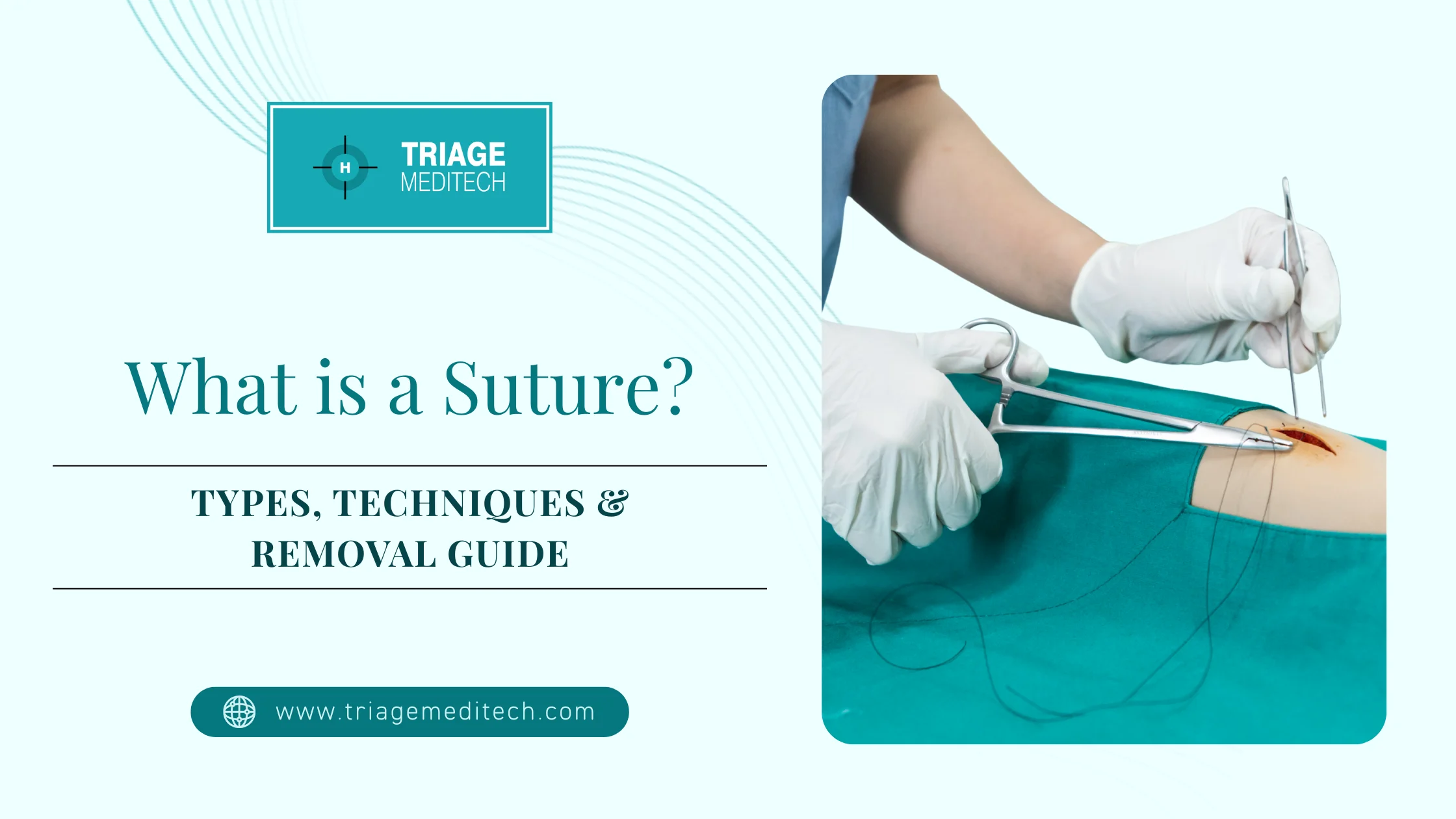
In general terms, a suture is a device for a physician or surgeon to hold tissues together after an injury or during surgery. Think of it as specialised sewing. The basic function of a suture is to keep a wound closed, so that healing can take place naturally without the wound being stretched out or reopened.
A suture typically comprises two parts the suture material (thread) and the needle. The needle serves to pass the suture material through the tissue, and the suture material holds tissue edges in approximation.
A Closer Look at the Different Types of Sutures
Sutures are not all the same. Sutures are classified according to some main features, which in effect determine their placement and usage.
1. Absorbable vs. Non-Absorbable Sutures
- Absorbable Sutures: As the name suggests, these sutures are designed to be broken down and absorbed by the body over time. This eliminates the need for a follow-up visit for removal. They are often used for deep wounds, internal incisions, and in areas where it’s difficult to remove stitches, like the mouth. Examples include catgut, polyglactin (Vicryl), and polydioxanone (PDS).
- Non-Absorbable Sutures: These sutures consist of materials that an organism’s body cannot distinguish and break down for its sustenance. These are used in the external part of the skin, and there are some applications in the heart, and wherever long-term support of tissue is needed. They have to be taken through physical removal by a healthcare professional. Some of the more common materials include silk, nylon, and polypropylene.
2. Monofilament vs Multifilament Sutures
- Monofilament Sutures: These consist of a single strand of material. They pass through tissues more smoothly and are less likely to collect bacteria, while the knots might be prone to slipping.
- Multifilament Sutures: These are strands of material that are braided or twisted. They are generally stronger and provide more secure knots. The downside to these sutures is that this braided configuration may harbour bacteria, thus not favourable for contaminated wounds.
The Sutures You Can´t See: The Human Skull
Curiously, the word suture is not only for wounds in a closed context. In situ anatomy, suture refers to immovable joints that connect bones of the skull. This cranial suturing forms a very charming instance of how the body “stitches” itself.
- Coronal Suture: It traverses the cranial vault, separating the anterior frontal bone from two posterior parietal bones. Sometimes, a baby’s soft spot is in this suture.
- Sagittal Suture: This suture runs right in the middle of the skull, connecting the two parietal bones.
- Lambdoid Suture: This suture separates the two parietal bones from the occipital bone at the back of the skull.
- Squamous Suture: The suture lies on the side of the skull, connecting the parietal bone to the temporal bone.
These natural sutures allow the skull to be flexible during birth and then to merge over time, protecting the brain.
The Art and Science of Suturing Techniques
Suturing is a skill that requires precision and knowledge. A doctor will choose a specific technique based on the type, location, and depth of the wound.
- Simple Interrupted Suture: This is one of the most common and fundamental techniques. Each stitch is tied off individually, which provides excellent wound closure and security. If one stitch fails, the others remain intact.
- Mattress Sutures: These techniques are designed to close deep wounds or to relieve tension on the wound edges.
- Vertical Mattress Suture: This technique goes “deep, then shallow” on one side of the wound, then repeats the process on the other side. It’s excellent for closing deep wounds and everting the skin edges (making them turn outwards), which is crucial for good healing.
- Horizontal Mattress Suture: This technique is a continuous stitch that runs parallel to the wound edges. It’s particularly useful for closing wounds under high tension and ensuring proper blood flow to the skin edges.
- Subcuticular Suture: This technique is often used for cosmetic reasons. The suture is placed just under the skin (in the dermal layer) in a continuous, buried fashion. There are no external stitches to see or remove, which often results in a better scar. It’s a great choice for wounds on the face or other visible areas.
- Suture Kit: For those learning the ropes, a suture kit is an essential tool. These kits typically contain a variety of suture materials, needles, and instruments like needle holders, forceps, and scissors, allowing students to practice various techniques on simulated skin.
The Suture Removal Guide: What to Expect
After a surgical procedure or injury, removing sutures (stitches) is an important step in the healing process. It helps prevent infection, reduces scarring, and ensures the wound closes properly. However, many people are unsure about when this step should happen. Understanding the typical timeline can ease anxiety and help you prepare.
When are Sutures Removed?
The timing depends on the location of the wound and the type of suture used.
- Face: 3–5 days
- Scalp: 7–10 days
- Torso, Arms, and Legs: 7–14 days
- Joints (e.g., knee, elbow): 14 days or more
How is a suture removal performed?
The process is quick and usually painless. A healthcare provider will first clean the area. Using special suture scissors and forceps, they will gently lift the knot of the stitch and snip the thread as close to the skin as possible. The suture is then carefully pulled out.
What if I forget to get my sutures removed?
Leaving non-absorbable sutures in for too long can lead to complications such as infection, tissue irritation, and increased scarring. It’s crucial to follow your doctor’s instructions for a timely removal.
The Suture Removal Guide: What to Expect
After a surgical procedure or injury, suture removal stands as an important step toward healing. It prevents the onset of infection, lessens scarring, and enhances good closure of the wound. However, so many people don’t actually know when this procedure is supposed to occur. Knowing the usual period will lessen the anxiety and also help you prepare.
When do you get your Sutures removed?
Depending upon where the wound is located and the type of suture used.
- Face: 3-5 days
- Scalp: 7-10 days
- Torso, Arms, Legs: 7-14 days
- Joints (e.g., knee, elbow): 14 days or more
How is Suture Removal Done?
The process is rapid, and in almost all situations, it is not painful. The healthcare provider will cleanse the area first. The provider will then lift the knot of the stitch slightly using special suture scissors and forceps and cut the thread as close to the skin as possible. Once done, the suture is gently extracted.
This should never happen, but if you forget to have them taken out….
There might be complications with non-absorbable sutures left in for too long: infection, tissue irritation, and heavier scarring. It is imperative, therefore, that you obey the instructions given for suture removal in due time.
More Advanced Patient Considerations
- Wound Care: While sutures remain, it is especially important to keep the wound clean and dry. Follow your physician’s instructions faithfully in cleaning and dressing the wound.
- Signs of Infection: Be on the lookout for redness, swelling, warmth, pain, or pus from the wound: these indicate infection and such conditions demand emergency medical care.
- Scarring: Sutures try to minimise scarring, but some scarring is inevitable. Wound care after removal and protection from the sun will improve scar appearance.
Conclusion
Sutures, from the intricate joints of the skull to the precise work of a surgeon closing an incision, form the crux of the whole realm of anatomy and medicine. Understanding the various materials, the various techniques, and the importance of proper removal enables you as a patient and further reveals the amazing precision and care that is bestowed on the healing process. Whether it is a simple interrupted suture or a cosmetically oriented subcuticular suture, each stitch is important for bringing us back to health.
Disclaimer: This article is for informational and educational purposes only, and no medical advice should be taken from it. Always consult an interventional radiologist or vascular surgeon for treatment-related concerns or for health concerns you may have. Triage Meditech is not liable for any medical decision taken by any individual based on the contents of this article.
Frequently Asked Questions (FAQ)
Q: Are sutures painful to get?
A: A local anaesthetic is typically used to numb the area before suturing, so you should not feel any pain during the procedure. You may feel a slight pulling or pressure.
Q: Do absorbable sutures leave a mark?
A: Absorbable sutures can sometimes cause a small bump or cyst as they dissolve. However, this is usually temporary and often doesn’t affect the final cosmetic outcome.
Q: What is the difference between stitches and sutures?
A: The terms “stitches” and “sutures” are often used interchangeably. However, technically, a “suture” refers to the medical device itself (the needle and thread), while “stitches” refers to the loops or knots made during the suturing process.
Q: Can I remove my own sutures?
A: No. Suture removal should always be performed by a trained healthcare professional. Improper removal can lead to infection, re-opening of the wound, or increased scarring.
Q: Can I shower with sutures in?
A: Your doctor will provide specific instructions. In most cases, you can shower but must avoid soaking the wound in baths or pools. It’s crucial to pat the area dry gently after showering.