Case Study of Venous Leg Ulcer
Aim of Therapy:
MANAGEMENT OF VENOUS LEG ULCER USING NEGATIVE PRESSURE WOUND THERAPY
Patient Information:
| First Dressing Application Date: | 19/10/2022 |
| Dressing Remove Date: | 28/10/2022 |
| Patient Name: | Mr. Siraj Ahmed |
| Patient Age: | 41-Year-Old |
| Wound Type: | Venous Leg Ulcer |
| Exudates Type with Wound Depth: | Purulent and Serosanguinous (2-3cm Deep Approx) |
| Hospital Name: | J.J Hospital ( Mumbai ) |
| Doctor Name: | Dr. Salman |
| Doctor Specialty: | General Surgeon |
| Clinical Person Name: | Mr. Suresh Yadav |
| Patient Profile: | Surgical Wound |
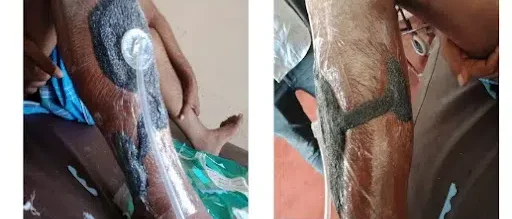
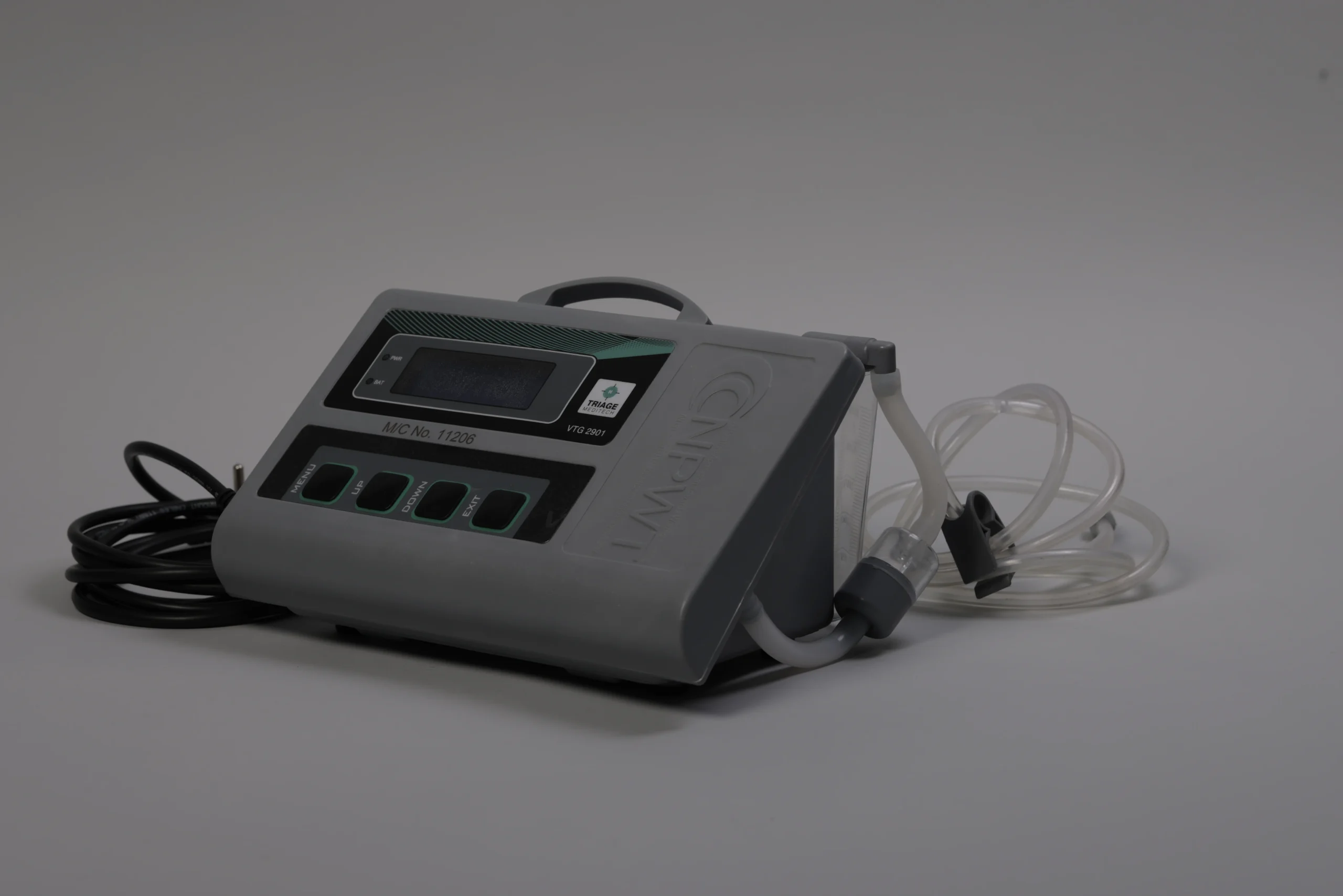
| Dressing Type/Device: | CCNPWT (VTG-2901) |
| Pressure Range: | -125mmHg |
| Any Major Illness During Therapy: | Severe Pain in his legs |
| Diabetic / Non -Diabetic | Non-Diabetic |
| Supportive Ongoing Treatment | Antibiotics & Painkillers |
| Total Days of Recovery or Treatment Duration | 10 Days |
| Wound Location | Lower Extremity (Right Lower Leg ) |
Clinical Scenario:
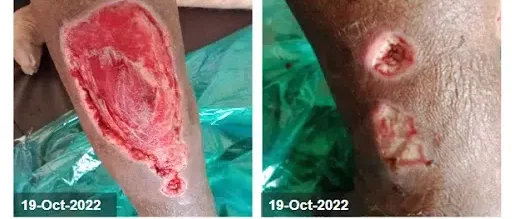
A 41-year-old male patient presented to the hospital with a venous leg ulcer on his right leg (VLU). The wound was excruciating, and he was unable to walk correctly. When the doctor examined the wound, his previous medical history included peripheral vascular disease. His wound copiously drained ulcerations on the right lower leg area, which spread despite using multiple cleaning methods. There are two ulcers present on the right lower leg. One is on the tibialis anterior and the other is on the side of the leg. Symptoms were present and failed to respond to compression and dressing. After a complete examination of the wound, the doctor suggested CCNPWT (VTG 2901) for faster wound healing.
Management:
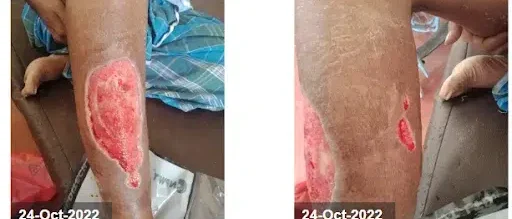
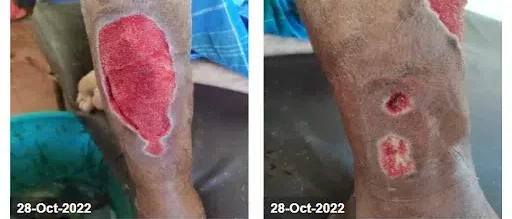
After disinfecting the wound, the CCNPWT (VTG 2901) system was initiated at a continuous pressure range of -125 mmHg. Following the treatment, the purulent discharge dramatically decreased. CCNPWT (VTG 2901) started the exudate management, removal of edema, and promotion of tissue perfusion, and it started the stimulation of granulation tissue formation. After 2 dressing changes, 80 per cent of the granulation tissue filled the wound bed. After achieving a satisfactory result, the therapy was stopped, and the wound underwent further closure.