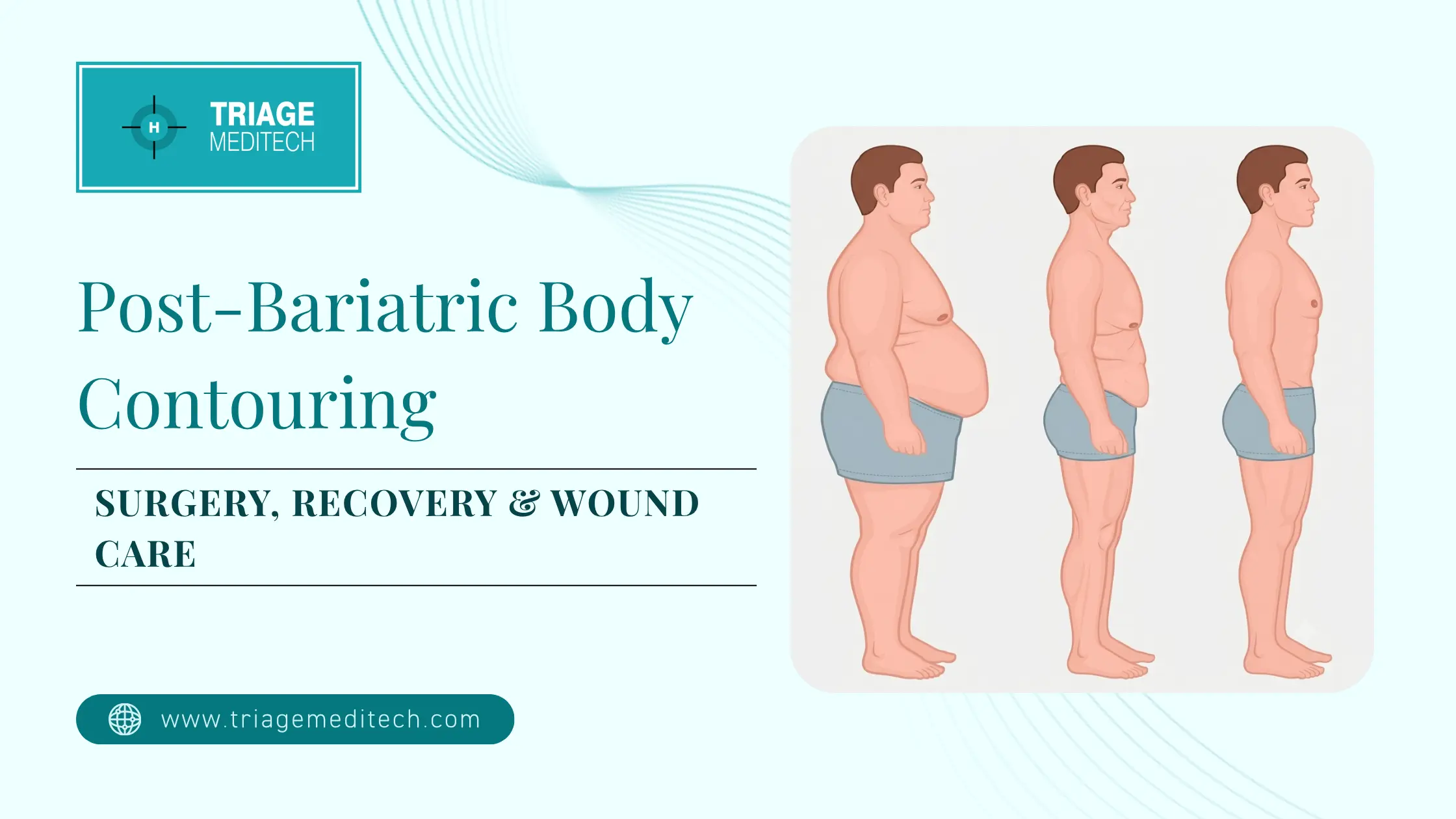
What Is Post-Bariatric Body Contouring?
Substantial weight loss after bariatric surgery is a life-changing achievement, and for many patients, it comes with an unexpected complication: excess skin that no amount of exercise or time will resolve on its own. This is where body contouring surgery enters the conversation, not as a cosmetic afterthought, but often as the final, necessary step in a patient’s full transformation.
Why Does Excess Skin Remain After Major Weight Loss?
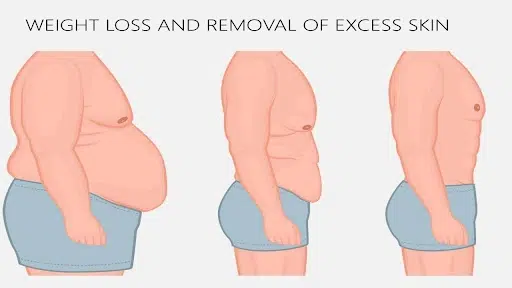
Skin has elasticity, but that elasticity has limits. When someone carries significant excess weight for years, the skin stretches to accommodate it. Collagen and elastin fibers, the proteins that give skin its ability to snap back, become damaged or overstretched in the process.
After massive weight loss, especially when it happens relatively quickly (as it often does in the 12 to 18 months following bariatric surgery), the skin simply can’t retract fast enough, or far enough, to match the new body underneath. The result is loose, hanging skin, most commonly around the abdomen, arms, thighs, breasts, and back. Age, genetics, sun exposure, and the total amount of weight lost all affect how much skin retraction happens naturally, but for most massive-weight-loss patients, some degree of surgical correction is the most definitive option for removing excess skin.
It’s Not Just Cosmetic
This is the point patients, and sometimes insurance companies, Excess skin can cause functional and medical problems in some patients:
- Chronic skin infections and rashes in folds that stay warm, moist, and irritated
- Back, neck, and shoulder pain from the physical weight of hanging tissue, particularly with heavy breast or abdominal skin
- Restricted mobility and exercise limitations, which can undermine the very lifestyle changes that produced the weight loss
- Difficulty with hygiene and clothing fit, which affects daily function, not just appearance
- Skin breakdown, chafing, and open sores, especially in skin folds under the arms, abdomen, and thighs
For many patients, contouring surgery is what finally makes their post-surgical life fully livable, not just visually different.
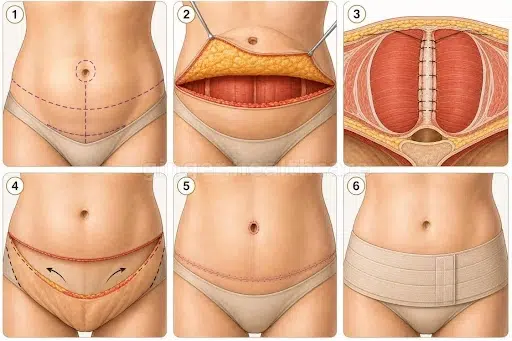
The Common Procedures
Post-bariatric body contouring is rarely a single operation. Surgeons typically address the body in regions, and the right combination depends on where excess skin has settled.
| Abdomen | A panniculectomy primarily removes excess skin/fat, while abdominoplasty may include abdominal wall tightening depending on the patient. A full abdominoplasty (tummy tuck) also tightens the underlying abdominal muscles for a flatter contour many patients need both. |
| Lower body | A lower body lift, or belt lipectomy, circles the entire midsection — abdomen, waist, hips, and buttocks — removing a full “belt” of loose skin in one continuous procedure. |
| Arms | Brachioplasty removes and tightens loose skin along the upper arms, which often hangs noticeably after major weight loss and can restrict arm movement. |
| Thighs | A thigh lift addresses excess skin on the inner and/or outer thighs, which can cause chafing and irritation with walking. |
| Breasts | Depending on goals, this might mean a breast lift (mastopexy), a reduction, an augmentation, or a combination of lift and implant to restore lost volume and position. |
| Face & neck | Facial and neck skin can also lose volume and elasticity after major weight loss; a face or neck lift is sometimes added later in the process. |
Timing: When Is the Right Time?
Surgeons generally want to see several things in place before scheduling body contouring:
- Weight stability. Most surgeons wait until weight has been stable for at least 3 to 6 months, and timing varies and depends on weight stability, nutrition, overall health, and surgeon assessment, often closer to 12 to 18 months post-bariatric surgery, since continued weight loss after contouring can undo results or complicate healing.
- Proximity to goal weight. Being close to a realistic goal weight generally produces better results and lower complication rates than operating on someone still losing significant weight.
- Nutritional stabilization. Bariatric surgery changes how the body absorbs nutrients, and protein, iron, and vitamin deficiencies are common. Surgeons typically check bloodwork beforehand, since poor nutritional status significantly slows wound healing.
- Non-smoking status. Smoking dramatically increases the risk of skin necrosis and poor healing. Most surgeons require a smoke-free period of several weeks before and after surgery.
- Realistic expectations. Patients benefit from a frank conversation about what surgery can and can’t achieve, since scarring is a permanent tradeoff for the results.
Staging: Why It’s Rarely One Surgery
Because so many areas may need attention, and because operating on too much tissue at once increases risk, post-bariatric contouring is usually staged across multiple procedures spread over 12 to 24 months or longer. A common approach tackles the lower body first (abdomen, waist, hips), since this is often the area causing the most functional problems, followed by arms and thighs, and finally breasts or upper body work.
Combining some procedures in a single operation can reduce total recovery time and cost, but surgeons balance this against anesthesia time limits and blood loss, since surgeons consider operative time, blood loss, patient health, and the number of procedures being combined. This is a conversation to have directly with a surgeon, who will sequence the plan based on individual anatomy, health status, and priorities.
Risks Specific to This Population
Post-bariatric patients face a somewhat different risk profile than typical cosmetic surgery patients:
- Nutritional deficiencies can impair collagen production and wound healing, making careful pre-surgical bloodwork essential.
- Longer, more extensive scars are often unavoidable given the amount of tissue being removed — a trade-off patients need to accept going in.
- Seroma formation (fluid collecting under the skin) is common after large-volume tissue removal and often requires drains for one to several weeks.
- Wound healing complications, including delayed healing or minor separations along incision lines, occur more frequently in this population.
- Blood clot risk is elevated in longer procedures, so many surgeons use blood-thinning protocols and compression devices during and after surgery.
None of this is meant to discourage the procedure for most patients, the potential benefits and risks should be discussed individually with a qualified plastic surgeon. But it’s why choosing a surgeon experienced specifically with post-bariatric patients matters more here than in many other cosmetic procedures.
Insurance and Cost
Coverage varies significantly by procedure and by documented medical necessity. A panniculectomy is sometimes covered by insurance when a patient can document recurring rashes, infections, or functional impairment caused by excess skin, this typically requires photos, medical records, and sometimes a trial of conservative treatment first. Purely aesthetic elements like an abdominoplasty’s muscle tightening, arm lifts, thigh lifts, and breast lifts are usually considered cosmetic and paid out of pocket, even when a panniculectomy performed at the same time is covered.
Out-of-pocket costs for a full contouring plan, spread across multiple stages, commonly run into the tens of thousands of dollars in total. Patients should get a clear, itemized quote per stage and ask directly what insurance will and won’t cover before committing to a surgical plan.
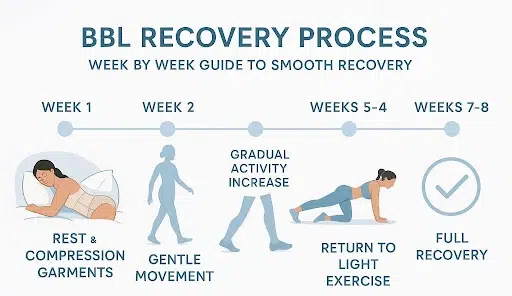
Recovery: What to Expect
Recovery is more involved than most single cosmetic procedures, given the scope of tissue removed. Patients typically stay in the hospital one to a few nights for larger procedures like a lower body lift, go home with surgical drains for one to three weeks, and need several weeks of restricted activity, especially avoiding heavy lifting or strenuous exercise. Full results, once swelling resolves and scars mature, can take six months to a year to fully appreciate. Patients who’ve had multiple bariatric-related surgeries often describe the recovery as demanding but worthwhile, particularly once chronic skin irritation and mobility issues resolve.
Choosing the Right Surgeon
Experience matters enormously here. A board-certified plastic surgeon with a specific track record in post-bariatric body contouring will understand the nutritional, medical, and staging considerations unique to this population in a way that a general cosmetic surgery practice may not. Ask prospective surgeons how many post-bariatric patients they’ve treated, how they typically sequence multi-stage plans, and how they manage nutritional clearance before surgery.
For many patients, contouring surgery is what finally makes their post-surgical life fully livable, not just visually different.
The Bottom Line
For many people who’ve lost massive amounts of weight, Body contouring can address both functional concerns and changes in appearance following major weight loss. It’s the step that finally resolves the physical and functional problems weight loss surgery didn’t fix on its own. It’s a significant commitment: multiple procedures, meaningful recovery time, permanent scarring, and often substantial out-of-pocket cost. But for patients dealing with chronic rashes, pain, and mobility limits from excess skin, it’s frequently described as completing a transformation that started with the decision to have bariatric surgery in the first place. As with any major surgical decision, the right next step is a consultation with a board-certified plastic surgeon who can evaluate individual anatomy, health status, and goals.
| A note on this article: This content is for general educational purposes and doesn’t replace a one-on-one consultation with a board-certified plastic surgeon. Individual results, risks, insurance coverage, and recommendations vary by person. |